US
US NZ
NZ UK
UK SG
SG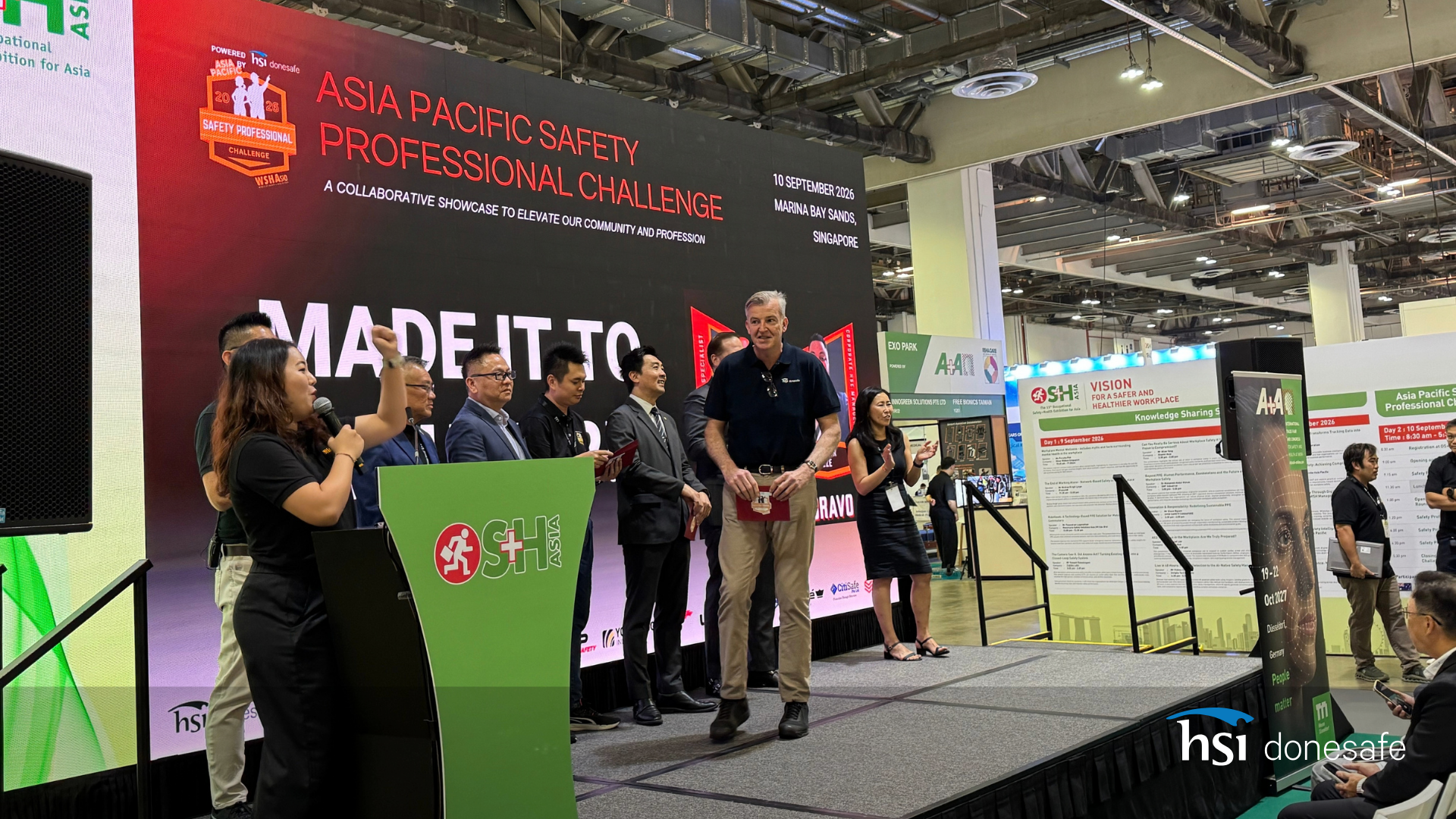
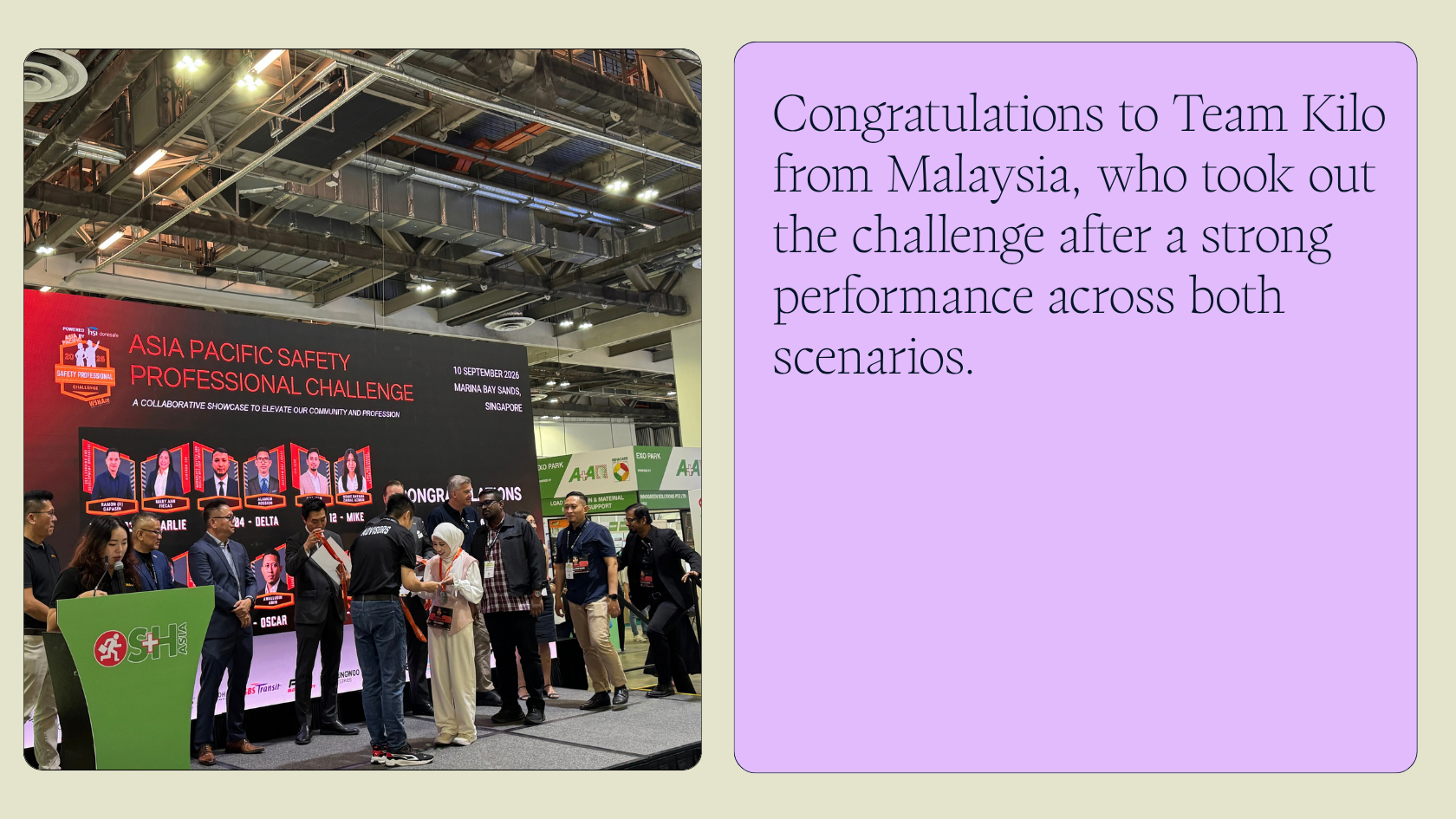
At OS+H Asia in Singapore, HSI Donesafe supported one of the live stations in the inaugural WSH Asia Pacific Safety Professional Challenge.
The format was straightforward. Teams were given two workplace scenarios and asked to identify as many hazards as possible.
Each team had 20 minutes, with 10 minutes per scenario, to:
- identify the hazard
- select the correct hazard classification
- assess severity
- recommend appropriate control measures
- submit their evidence through Donesafe
The challenge was designed to test practical safety knowledge. It also gave us a chance to see how Donesafe worked when people were dropped into a live reporting environment with no previous experience of the platform.
89 hazard reports in 20 minutes
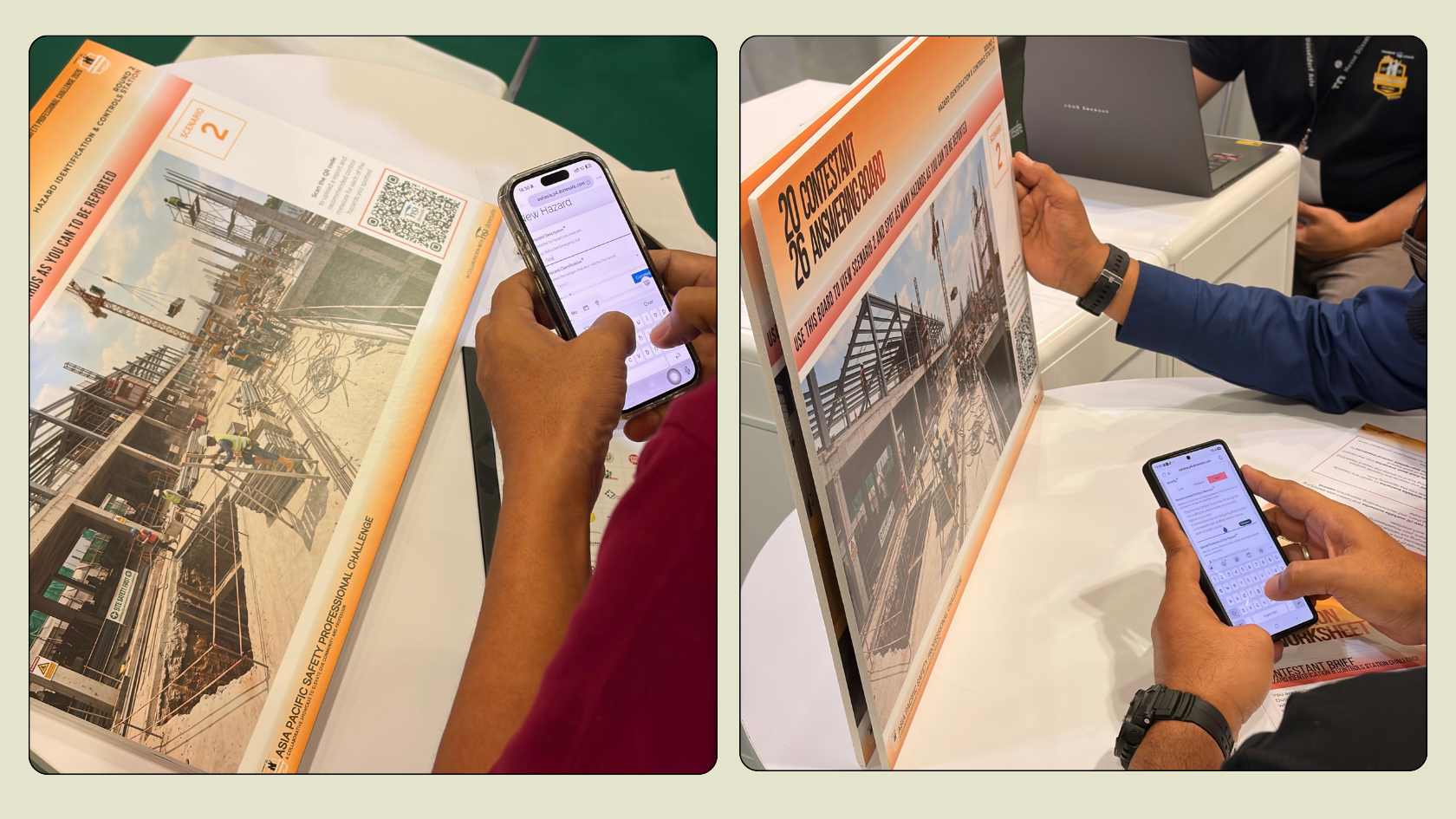
After a short briefing, participants scanned a QR code, opened the Hazard Report and got started.
Across the eight teams, 89 hazard reports and recommended controls were submitted during the 20-minute challenge.
There was no system training and no time set aside to familiarise participants with the platform. They moved straight from identifying a hazard through classification and assessment to documenting the controls they would recommend.
For frontline reporting, that simplicity matters. The less effort it takes to capture a hazard properly, the easier it is to make reporting part of everyday safety activity rather than another process people have to work around.
The challenge also showed the value of having the right information captured at the point of reporting. Each submission came through a consistent workflow, giving the judging team structured information they could work with immediately.
The same information supported the judging
Every submission then needed to be reviewed and scored against three criteria:
- 1 point for identifying a legitimate hazard
- 1 point for the correct hazard classification
- up to 3 points for appropriate and effective control measures
The judges reviewed each submission directly in Donesafe and recorded the score against it.
Because the information had already been captured in a consistent format, there was no need to transfer submissions into a separate spreadsheet before they could be assessed. The judges could work directly from the reports, apply the criteria and move through the entries.
It is a small example of a much bigger issue for safety teams. The quality and structure of information at the point of capture has a direct impact on what can happen with it afterwards.
From reporting to results
The reporting workflow had been configured before the challenge, so the submissions and scoring were already set up to flow into the final reporting.
Once the judging was complete, the organisers had the results almost immediately. There was no separate exercise to consolidate the submissions or reconcile scores across different systems.
For the challenge, that meant less administration for the people running it. In a workplace setting, the same principle supports a much more useful outcome. A hazard can be captured by someone on the frontline, reviewed by the appropriate person and fed into reporting and follow-up without information being lost or re-entered along the way.
That connection between frontline activity and management visibility is where safety technology starts to become more useful than a simple reporting tool.
Making reporting easier without losing control
The challenge was a useful reminder that usability and structure need to work together.
A person reporting a hazard should not have to understand the system behind the process. They need a straightforward way to record what they have seen and provide enough information for someone else to assess and act on it.
For safety teams, the requirement is different. They need consistent data, clear classifications, visibility of what is being reported and a reliable way to move information through review and action.
The challenge brought both sides together in one workflow. People could get into the reporting process quickly, while the judging team received structured information that was ready to review and report on.
That is ultimately what good safety technology should do. Make it easier for people to contribute without making it harder for the organisation to manage what happens next.
Share: