AU
AU NZ
NZ UK
UK SG
SG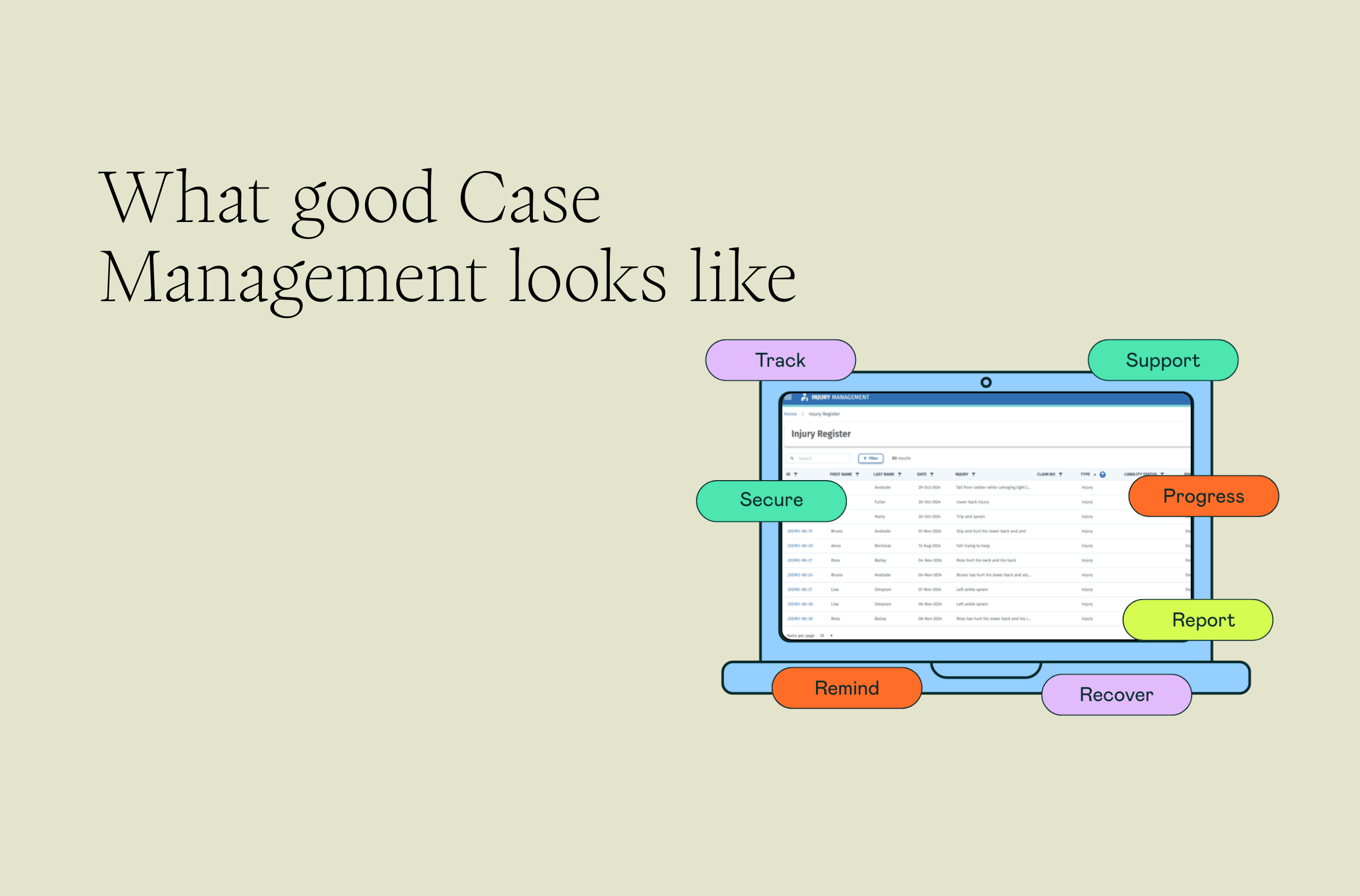
If you’re responsible for injury and claims management, you’ve probably felt the shift happening around you. What worked five years ago is no longer enough. Today, the industry is demanding greater clarity, better outcomes, and stronger evidence, not just process completion.
As Australia’s Personal Injury National Standards prepare to launch in 2026, stakeholders are working toward a nationally‑aligned definition of what high‑quality claims service looks like.
Good case management has become about supporting recovery, reducing risk, and enabling timely return to work. If you want your organisation to keep pace with these expectations, and the outcomes those expectations drive, here’s what really matters.
Early and Consistent Engagement Makes a Difference
The sooner an injured worker is contacted and supported, the better the outcomes. Australian evidence shows that early intervention in the workers’ compensation process contributes to faster recoveries and improved return‑to‑work outcomes.
This isn’t about being “nice” — early and proactive engagement reduces the time a worker spends off the job, lowers claim costs, and supports rehabilitation. It also signals to all parties that the claim will be handled thoughtfully, not reactively.
What this looks like in practice:
- Acknowledging a notification quickly
- Contacting the worker within the first 24 hours
- Liaising early with treating practitioners and the employer
- Setting clear expectations about next steps
These are small but crucial actions that show you’re managing the claim with purpose.
Documentation That Works for You (Not Against You)
We often see documentation treated as a compliance task or something to satisfy an auditor or insurer. That mindset doesn’t help you or the injured worker. Effective case managers use documentation as evidence of thoughtful decisions and outcomes‑oriented action.
Clear, complete records help in three key ways:
- Consistency: Everyone involved can see what has happened and why.
- Transparency: Insurers, employers, and workers understand decisions.
- Performance Improvement: You can learn from past cases and refine future plans.
For organisations subject to regulatory audits, such as those under the State Insurance Regulatory Authority (SIRA) guidelines, documenting rationale and contact with relevant parties isn’t optional but expected.
Supporting Both Physical and Psychological Recovery
Injury management today is about more than physical injury. Psychological injury claims are rising within Australian workers’ compensation systems and often result in longer time off work and significantly higher claim costs.
Good case management recognises this and responds with supportive, person‑centred strategies rather than a tick‑box approach. That means early screening for psychosocial risks, tailored support plans, and maintaining open lines of communication throughout recovery.
In practice, this could involve:
- Regular check‑ins with the worker
- Coordinating with mental health professionals
- Adjusting duties or environments based on capacity
This level of care separates effective case management from average administration.
Measuring What Matters
Traditional measures like “claim closed” or “report submitted” tell you nothing about the quality of recovery. Good case management is judged by outcomes that matter:
- Timely and safe return to work
- Improved wellbeing for the injured worker
- Reduced claim durations
- Lower long‑term costs for your organisation
These are the indicators that insurers and regulators are beginning to benchmark against and what many national frameworks are designed to support.
Closing the Loop on Quality
Today’s best case managers anticipate issues and adjust in real time. They see documentation not as a burden but as insight. They recognise that supporting psychological and physical recovery is part of the work, not an add‑on.
Good case management is helping people recover faster while protecting the organisation from unnecessary cost and disruption.
Solv Injury Management helps you deliver this level of care consistently. It centralises case notes, timelines, decisions, and communications in one place so you can document thoughtfully and report clearly. It reduces routine administrative work, giving you more time to engage with the worker and shape the recovery pathway. And it equips you with the tools to measure outcomes that reflect not just volume, but quality, helping you meet the expectations of insurers, regulators, and most importantly, the people you support. Solv also integrates seamlessly with Donesafe, completing a connected approach to workplace safety and injury management.
Share: