AU
AU NZ
NZ UK
UK SG
SG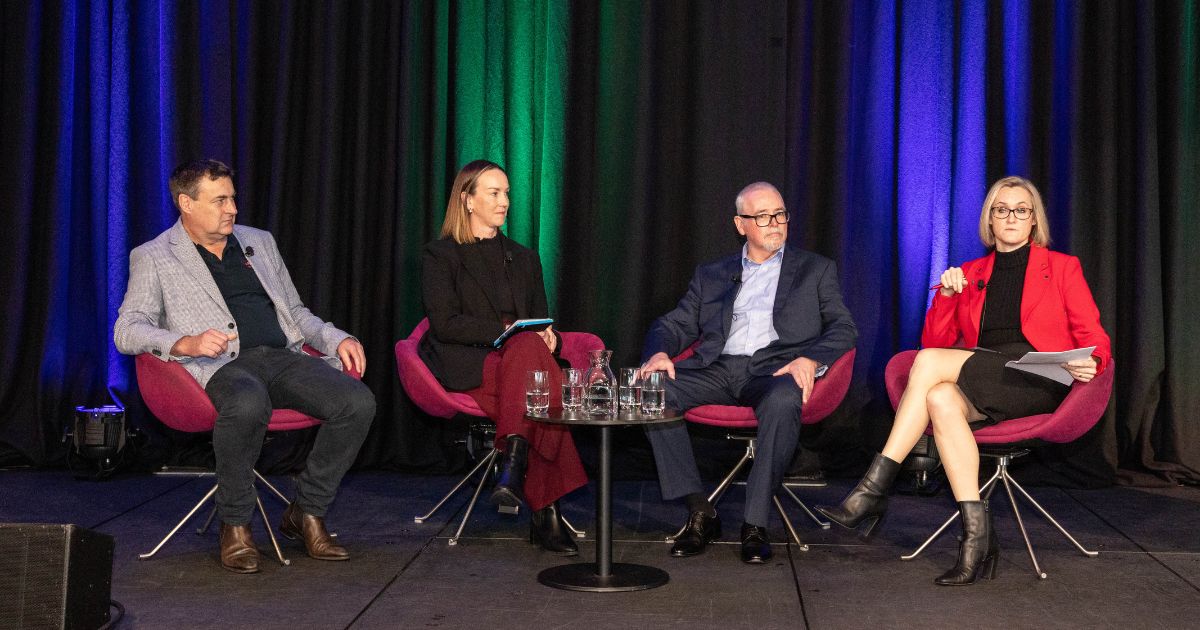
At the recent AIHS National Safety Conference in Adelaide, a foundational shift occurred during a headline keynote panel discussion. Titled “How Shared WHS and Workers’ Compensation Health and Safety Strategies Can Support a More Health-Led Approach to Managing the Total Cost of People Risk,” the session moved beyond standard compliance talk to diagnose a systemic vulnerability in modern enterprise operations: the artificial, costly separation between proactive safety and reactive injury management.
Work Health & Safety (WHS) and Workers’ Compensation (WC) has been treated like entirely separate worlds. WHS lives upstream, focused on risk mitigation and incident prevention; WC lives downstream, managing claims, return-to-work (RTW) logistics, and financial aftermath. The panel featured expert perspectives from Cass Wilde, David Fryar, and Tom Flynn, hosted by Sky, and laid bare the reality that this structural fragmentation directly harms injured workers, accelerates professional burnout, and inflates the true cost of people risk.
“Everyone’s got a piece of the puzzle, and the injured worker is the one that misses out.” — David Fryar, AIHS Panelist
From a platform perspective, this discussion highlights the exact problem that the Donesafe and Solv ecosystem was built to solve. When safety data and injury management data are locked in distinct operational silos, businesses lose the unified data loops needed to stop recurring losses. This article breaks down the core structural arguments from the AIHS panel and explains how an integrated digital ecosystem turns downstream claims into predictive, upstream safety safeguards.
Part 1: The Cost of Fragmentation — Silos, Tax Mentalities, and Hidden Risks
The panel began by addressing a common corporate mindset: viewing workers’ compensation as an inevitable, unavoidable cost of doing business, a “mandatory tax.” This mindset prevents organizations from seeing claims data as a highly valuable source of operational intelligence.
“A lot of organizations see workers’ compensation as that tax. It’s the cost of doing business… When you take out car insurance, that’s for a vehicle… this is a human insurance product. And I think that’s often one that sits with the CEO.” — Cass Wilde, Insurance & Claims Expert
This fragmentation is built deep within enterprise organizational charts, vocabulary, and even baseline professional training. David Fryar highlighted a stark example: professional training curricula for claims case managers regularly exclude foundational modules on WHS or risk management. Because these teams speak different operational languages, data remains isolated, causing organizations to suffer from costly blind spots:
-
Siloed Premium Risks: An organization might experience a temporary drop in workers’ compensation claims and celebrate a superficial win, completely unaware that their income protection premiums have simultaneously doubled. Without a unified view, risk isn’t eliminated—it is simply pushed into a different line item.
-
The Broken Perception of Support: Tom Flynn emphasized that the most predictive indicator of a successful, low-cost return-to-work outcome is an employee’s high “perception of support” from their employer. When WHS and case management operate in isolation, communication breaks down, the injured worker feels abandoned, and claim durations lengthen.
-
The Rise of Secondary Psychological Injuries: A physical injury managed in an administrative silo frequently triggers a secondary psychological injury, often driven by a confusing, adversarial claims process rather than the original physical event. Isolated safety teams cannot prevent these upstream because they lack visibility into the downstream recovery phase.
The Donesafe & Solv Perspective
When an incident occurs in Donesafe, it shouldn’t hit a structural brick wall. By natively bridging the gap into Solv, the case management process inherits the full operational history of the safety environment. The worker’s journey remains transparent, consistent, and visibly supported, systematically protecting the “perception of support” that limits claim escalation.
Part 2: The Solution — Building an Intelligence-Led Feedback Loop
To break down these operational barriers, the panel advocated for a continuous, bidirectional feedback loop where data and insights from the recovery phase (injury root causes, real-world costs, lost time, and rehabilitation barriers) are systematically fed back to the safety team to update risk assessments and prevention protocols.
Cass Wilde shared a highly instructive case study illustrating the necessity of this unified intelligence. A large mining organization experienced a notable spike in psychological injury claims among its female workforce. Viewed strictly through an isolated HR or claims lens, the data initially pointed toward “interpersonal conflicts,” a downstream symptom.
However, an integrated, deep-dive investigation revealed a surprising upstream root cause: the organization had launched a highly successful “speak-up” campaign against sexual harassment. While the campaign effectively encouraged reporting, the internal HR teams were structurally unequipped to handle the specialized, sensitive investigations required. The psychological harm was being caused by the combative, broken investigation process itself. By connecting the downstream claims data back to the upstream operational process, the company and insurer co-designed a targeted mediation service and retrained HR teams, correcting the systemic failure.
“The harm that we were seeing in the claim was not actually from the speak up itself, it was from the process that those individuals were then put through.” — Cass Wilde
Transitioning to this intelligence-led model requires modern technology infrastructures. While long-term enterprise goals should focus on integrated data models and unified dashboards, the panel emphasized that establishing a structured interaction schedule and shared governance forums between WHS, Injury Management, and HR is an immediate, high-impact first step.
The Donesafe & Solv Perspective
This case study proves that data without context leads to incorrect conclusions. The combination of Donesafe and Solv provides a unified platform where upstream safety initiatives and downstream case management outcomes are visible in a single dashboard, allowing risk professionals to trace downstream injuries back to their true upstream operational root causes.
Part 3: Supporting Our People — Workforce Fatigue and Professional Pathways
The third chapter of the discussion focused on the acute human crisis affecting injury management: high workforce turnover and operational burnout. In recent years, the average professional tenure of a claims case manager has dropped to as low as 14 months, driven by vicarious trauma, compassion fatigue, and high administrative workloads.
“The case managers who are providing that care to the injured people actually have that care… As an industry body, we’re part of the problem if we think about what is expected of a good case manager.” — Cass Wilde & David Fryar
David Fryar presented a compelling solution to this talent crisis: building deliberate, formal career pathways and professional cross-pollination between Injury Management and WHS functions.
Case managers develop exceptional, battle-tested skills in strategic communication, multi-stakeholder management, regulatory compliance, and complex problem-solving—capabilities that are highly valuable within an upstream WHS team. Conversely, exposing WHS professionals to the complexities of return-to-work and claims tracking builds deep empathy and deepens their technical understanding of risk impacts.
“Could [a return to work coordinator] be a really, really good work health and safety person? Because people in our industry do not see it as a career path… They’re not helping feedback into how you stop that actually happening.” — David Fryar & Tom Flynn
By establishing formal career mobility between these two functions, enterprises can extend professional tenure, reduce burnout, and naturally break down organizational silos. The panel also emphasized the critical importance of professionalizing case management through advanced certifications focused on complex psychological claims, vicarious trauma self-care, and leveraging assistive technologies (such as wearable exoskeletons) to expand the return-to-work toolkit.
The Donesafe & Solv Perspective
Administrative burden is a primary driver of case manager burnout. By automating routine compliance documentation, workflows, and communications, Solv frees case managers from manual paperwork, allowing them to focus on meaningful human care, while Donesafe provides the safety tools to accelerate their professional cross-skilling.
Part 4: Blueprint for Action — Immediate Implementation Plan
To conclude the session, the panel challenged the audience to move beyond theory and implement immediate, practical changes within their organizations. Below is an operational checklist designed for enterprise safety and risk leaders:
-
Initiate Cross-Functional Exposure: Break the ice immediately. If you operate within the WHS team, schedule a formal meeting with your organization’s workers’ compensation and injury management leads (and vice versa) to understand their operational workflows, data structures, and daily hurdles.
-
Request a Macro-Level Portfolio Review: Move past isolated claim-by-claim management. Contact your workers’ compensation insurer’s account manager and request a portfolio-wide, macro-level trend analysis to uncover systemic risk patterns that site-specific tracking regularly misses.
-
Establish a Joint Governance Forum: Form a cross-functional steering committee comprising leadership representatives from WHS, Injury Management, HR, and Operations. This group should hold a formal mandate to evaluate integrated “people risk” metrics and co-design cross-departmental interventions.
-
Integrate Operational Interaction Schedules: Build regular collaborative habits. Invite injury management coordinators into regular safety committee reviews, and embed WHS specialists directly within strategic claims and insurer review meetings to cultivate shared visibility.
-
Map Structural Career Development Pathways: Design formal, bidirectional career trajectories between WHS and injury management roles. This structural evolution improves talent retention, mitigates role fatigue, and embeds deep, cross-functional risk expertise into your organization’s future leaders.
The Boardroom Imperative
Ultimately, the unified management of people risk must rise above middle-management initiatives to become a core priority for executive leadership. As Tom Flynn concluded: “People are our most important asset. And that means safety, injury management, and workers must have a voice at the board level.”
Siloed corporate systems create siloed data, which in turn creates fragmented care and unmanaged financial losses. True competitive advantage belongs to organizations that integrate their data ecosystems completely. By pairing Donesafe with Solv, enterprises acquire more than two market-leading platforms—they build a closed-loop system that links prevention and recovery seamlessly, protecting both their workforce and their bottom line.
Disclaimer & Attribution Note
This article is an independent editorial commentary and analytical breakdown compiled by the Donesafe and Solv team based on panel presentations at the 2026 AIHS National Safety Conference. Donesafe and Solv are not officially affiliated with, endorsed by, or partnered with individual panelists Cass Wilde, David Fryar, Tom Flynn, or their respective independent organizations. The insights, interpretations, and conceptual models presented above represent our own professional commentary on how unified technology ecosystems can support the industry-wide methodologies discussed during the session.
Share: