AU
AU NZ
NZ UK
UK SG
SG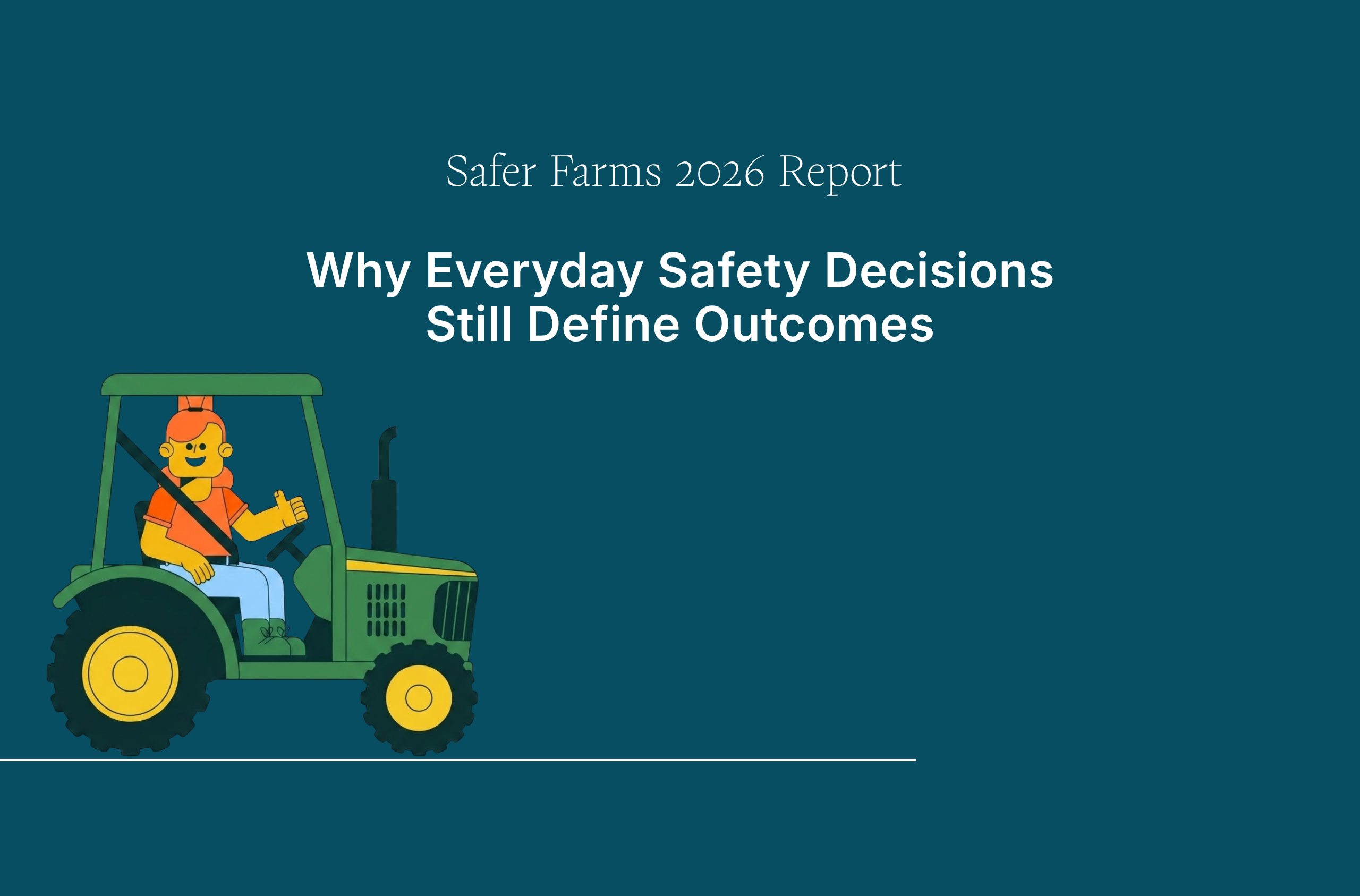
Australia’s agricultural industry has always carried unique safety challenges. Vast worksites, heavy machinery, remote locations, unpredictable conditions and a strong culture of independence all contribute to a working environment where risk is part of the daily reality.
However, the latest findings from Farmsafe Australia’s 2026 Safer Farms Report highlight a difficult truth that many of the incidents causing serious harm and fatalities are not the result of rare or unexpected events. They are happening during routine tasks, familiar environments and everyday decisions.
The report serves as a reminder that workplace safety is not only shaped by policies, procedures and technology; but by the behaviours leaders demonstrate, the standards they reinforce and the systems that help people make safer decisions every day.
The ongoing human cost of farm safety incidents
According to Farmsafe Australia, 53 people lost their lives on Australian farms in 2025, with a further 182 people suffering serious injuries.
The impact extends beyond workers. Six children were among those killed, while another 14 children suffered serious injuries.
Since 2019, 427 people have died on Australian farms, representing more than one farm-related fatality every week for seven consecutive years.
These figures reinforce why agriculture continues to be recognised as one of Australia’s most dangerous industries.
Safe Work Australia’s national work-related fatality data shows that the agriculture, forestry and fishing sector consistently records a significantly higher fatality rate than many other industries, with a fatality rate of 13.7 deaths per 100,000 workers.
While every industry faces safety risks, agriculture presents a unique challenge that many hazards are embedded into everyday operations. The tractor used every day. The vehicle driven across the property. The machinery operated during busy seasons. The shortcuts taken when time pressures increase.
The very familiarity of these tasks can sometimes make them more dangerous.
When routine work becomes the greatest risk
The Farmsafe Australia report highlights that the leading causes of farm fatalities have remained relatively consistent over time, including:
- Tractors
- Side-by-side vehicles (UTVs)
- Quad bikes
- Heavy farm machinery
These are not unfamiliar hazards. They are tools and vehicles that many agricultural workers interact with every day.
That is precisely what makes them challenging.
When people perform the same task repeatedly, confidence can increase while risk awareness decreases. A process that feels routine can become something people complete automatically, without stopping to reassess changing conditions.
This is where safety leadership becomes critical.
A strong safety culture is not built only around responding after something goes wrong. It is built by recognising where risk exists before an incident occurs and creating an environment where people feel empowered to make safer choices, even when deadlines, fatigue or operational pressures are present.
Safety culture starts with what leaders demonstrate
Farmsafe Australia’s 2026 National Farm Safety Week campaign focused on the theme:
“Set the Standard: Show ‘em how it’s done.”
The message is simple but powerful: safety expectations are established through action.
Workers often look to leaders, supervisors and experienced team members to understand what behaviours are truly expected. If leaders wear required protective equipment, follow procedures and take the extra time to complete tasks safely, those behaviours become normalised.
If leaders overlook shortcuts, accept unsafe practices or prioritise speed over safety, those behaviours can become embedded into the workplace culture.
This principle applies far beyond agriculture.
Across every industry, the strongest safety cultures are built when safety is visible, consistent and reinforced at every level of the organisation.
The move towards proactive risk management
Traditional safety management has often focused on documentation, compliance requirements and incident reporting. While these remain important, modern organisations are increasingly recognising that effective safety management requires a more proactive approach.
The goal is not simply to record what happened. It is to understand why it happened, identify patterns and prevent the next incident before it occurs.
This requires organisations to have visibility across their safety data, including:
- Recurring hazards and risk trends
- Near misses and leading indicators
- High-risk activities
- Corrective action completion
- Worker engagement and reporting patterns
Without connected information, organisations can struggle to see the bigger picture. Risks can remain isolated within spreadsheets, disconnected systems or individual teams, making it harder for leaders to identify where intervention is needed most.
Technology can play an important role by helping organisations bring safety information together, automate critical workflows and provide leaders with clearer visibility into operational risks.
However, technology alone does not create safer workplaces.
The strongest outcomes come when technology supports a broader safety culture built on accountability, communication and continuous improvement.
Small decisions create safer workplaces
The Farmsafe Australia report is a reminder that preventing workplace fatalities is not only about managing the biggest risks. It is also about improving the everyday decisions that happen thousands of times across a workplace.
Wearing a seatbelt in a side-by-side vehicle.
Wearing a helmet on a quad bike.
Using rollover protection.
Slowing down machinery.
Taking a few extra minutes to complete a task safely.
These actions may seem small, but over time they define the safety standard of an organisation.
Whether on a farm, a construction site, a warehouse or an industrial facility, workplace safety is shaped by the behaviours that become normal.
The challenge for leaders is to make safe work the easiest choice, the expected choice and the standard everyone follows.
Because ultimately, safer workplaces are not created by what is written in a procedure. They are created by what people do every day.
Sources
- Farmsafe Australia. 2026 Safer Farms Report / National Farm Safety Week 2026 campaign materials.
- Safe Work Australia. Work-related traumatic injury fatalities data and industry fatality rates.
Share: